|
Gairloch, Scotland by Wirestock via Magnific
Welcome to our August newsletter, the contents of which are as follows. As we are taking a summer break, our next newsletter will be with you in early October.
|
|
News
Infant milk news
Baby Feeding Law Group UK news
Forthcoming
Happy reading!
|
|
|
Happy World Breastfeeding Week 2026!
|
|
|
Every year, World Breastfeeding Week is celebrated from 1 to 7 August, with resources produced by the World Alliance for Breastfeeding Action (WABA) and available on the WBW website. Helpful resources include a poster and action folder, both available in multiple languages, as well as other resources which can be accessed here.
|
|
There are four main objectives for World Breastfeeding Week (WBW) 2026:
- Inform people about the importance of tracking progress and evaluating breastfeeding impact on nutrition, food security and poverty reduction.
- Anchor breastfeeding implementation through policies and guidelines across the Warm Chain (which connects people and organisations across healthcare, community and workplace settings to provide continuous support during the first 1000 days)
- Engage with individuals and organisations to enhance collaboration and support for breastfeeding.
- Galvanise actions on improving breastfeeding protection, promotion and support using lessons learnt.
The action folder provides suggestions for how each of the four objectives of WBW can be achieved, with links to practical resources that can be adapted and used across the world. For example, for objective 1, there are several suggestions of relevant indicators that should be monitored, including the recommendation for the World Breastfeeding Trends Initiative (WBTi) scorecard to be used as a monitoring tool. In the UK, colleagues in the sector have conducted the WBTi monitoring twice, in 2016 and 2024, and the reports are available on the WBTi UK website. The WBW 2026 action folder includes examples of what has worked in different countries, across multiple contexts, including high-income countries, providing lessons from which we in the UK can learn.
There are two campaigns that form part of the WBW 2026 actions, the WBW-SDG campaign and the Empowering Parents campaign.
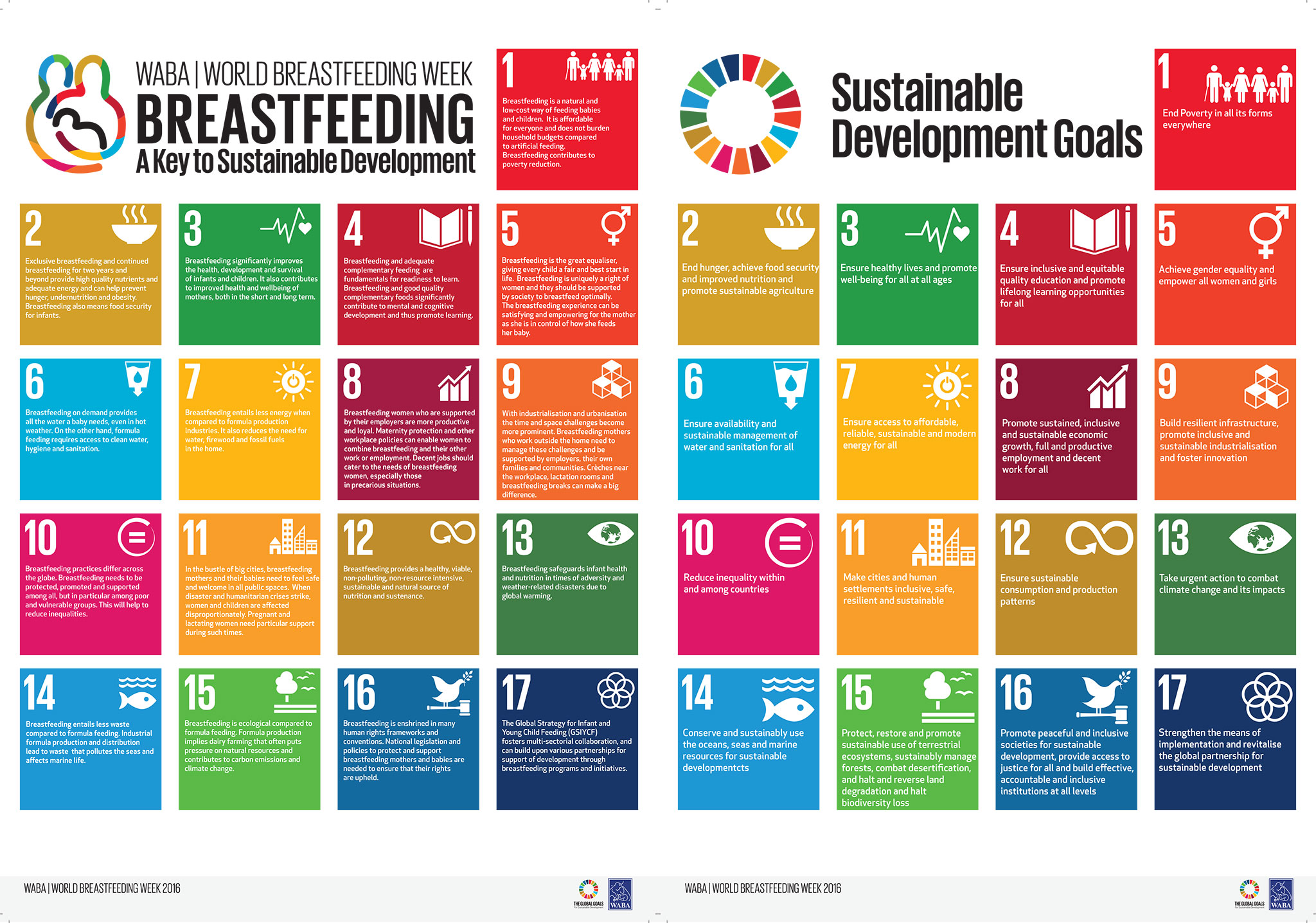
The World Breastfeeding Week -Sustainable Development Goals Campaign: WBW has been celebrated for 34 years, since 1992. Since 2016, WBW has been aligned with the United Nations’ Sustainable Development Goals (SDGs), because breastfeeding is key to sustainable development and can be linked to all 17 of the SDGs, as illustrated here. In 2018, WBW was even endorsed by the World Health Assembly as an important breastfeeding promotion strategy.
|
|
|
During WBW 2026, the WBW-SDG campaign is focusing on Thematic Area 1: Nutrition, food security and poverty reduction (see figure below).
|
|
|
Figure: Illustration of the SDGs that are relevant to Thematic Area 1, the focus of the 2026 WBW-SDG campaign. Credit: WABA
|
|
In England, the recently published Infant Feeding Survey 2024 shows that 26% of mothers reported exclusively breastfeeding (EBF) at 6 months. While this is a significant improvement from the 1% who reported EBF at 6 months in 2010, it still falls very short of the global average as reported in the 2025 Global Breastfeeding Scorecard (where an estimated 47% of infants under 6 months of age are exclusively breastfed) and the Global Nutrition Target for EBF of 60% by 2030. In the UK, where the cost of infant formula has increased in recent years, and remains very high, prioritising the protection, promotion and support of breastfeeding should be an important policy priority to contribute to optimal nutrition, infant food security and poverty reduction.
So far, in the UK, the devolved nations have shown great leadership in the area of infant and young child feeding policy:
While England does not have a single, overarching national breastfeeding strategy, there are a combination of NHS mandates, local authority programmes, and the Unicef UK Baby Friendly Initiative that all prioritise breastfeeding and improvements to infant feeding. One of the recommendations from the most recent WBTi UK report was for “Governments to prioritise and maintain comprehensive national infant feeding strategies which are long-term, resourced and led by a coordinator and multisectoral committee to bring system-wide change”. For England, there was a specific recommendation to establish a national feeding strategy with a time-bound action plan, multi-sectoral committee and national coordinator.
The Empowering Parents Campaign:
The main action of this campaign is to advocate for the “Warm Chain of Support for Breastfeeding” and to develop a mutual understanding of what is working in countries that are reporting good breastfeeding progress. This campaign places the mother-baby dyad at the core and links different actors across the health, community and workplace sectors to provide a continuum of care during the first 1,000 days.
|
|
The WBW 2026 action folder concludes with 6 key messages:
- Breastfeeding is a sustainable food choice. It is zero-waste, climate-safe, and available to every family regardless of income. Breastfeeding belongs at the centre of national nutrition, food security, and sustainability strategies, and its protection is an investment in the planet as well as in people.
- What gets measured gets improved. Track a small set of indicators consistently, disaggregate to expose inequities, and act on the gaps.
- Breastfeeding is a systems issue, not a willpower issue. Families succeed when policies, services, workplaces, and communities make breastfeeding feasible.
- Protection matters. Enforce the International Code of the Marketing of Breastmilk Substitutes, including digital marketing and prevent conflicts of interest in health systems. Communities and civil society can undertake independent Code monitoring, including online.
- Support must continue beyond the hospital. The first weeks after birth are critical to link every family to skilled help and peer support. Health systems can close the “first-week gap” with guaranteed post-discharge follow-up.
- Workplace support is non-negotiable for equity. Paid leave, breaks, and lactation space should cover all workers, including those in informal and precarious work. Employers can ensure paid leave, breaks, and lactation space are real in practice, not just on paper.
|
|
|
Earlier this week a global webinar was presented by the Global Breastfeeding Collective. Part of the focus was to "launch an updated global investment case for breastfeeding, commissioned by the WHO and UNICEF and produced by Nutrition International". They presented the economic case for investment in breastfeeding, what works, and shared country perspectives. A recording will be available on the website soon.
|
|
|
New: ‘Bite-Sized’ Healthy Start & Best Start Foods Resources
|
|
|
We know that busy parents and professionals often need quick, practical information that's easy to find and use. That's why we've developed a series of bite-sized, standalone resources, bringing together key messages from our Healthy Start Best Start Guide in an accessible and user-friendly format.
These resources have been designed to provide clear, visual information on topics including what Healthy Start and Best Start Foods payments can be used for, practical shopping ideas, and what Healthy Start Vitamins are, including how and why to use them.
We were particularly keen to highlight the important role that the Healthy Start and Best Start Foods schemes can play in supporting maternal nutrition during pregnancy and after birth. Messages about using these benefits to support mothers' own diets, including while breastfeeding, are often overlooked. Our new resources place greater emphasis on how the schemes can support both mother and baby through pregnancy, the postnatal period, and beyond.
The new resource collection includes:
Resource 1: What You Can Buy with Your Best Start Foods Card (Scotland) A simple visual guide showing what can be purchased using a Best Start Foods card.
Resource 2: What You Can Buy with Your NHS Healthy Start Pre-paid Card (England, Wales and Northern Ireland) A simple visual guide showing what can be purchased using the NHS Healthy Start Pre-paid Card.
Resource 3: Shop Smart with Healthy Start - Families Practical shopping list examples and ideas to help families make the most of their Healthy Start payments.
Resource 4: Shop Smart with Healthy Start - Pregnancy Shopping list examples focused on supporting nutrition during pregnancy.
Resource 5: Shop Smart with Healthy Start - Formula Feeding Information for parents who feed their baby formula, including shopping list examples.
Resource 6: Shop Smart with Best Start Foods Scotland-specific shopping list examples showing how families can maximise their Best Start Foods payments.
Resource 7: Healthy Start Vitamins: Information on Healthy Start vitamins, who can access them, and why they are important.
We hope these resources will help make Healthy Start and Best Start Foods information easier to understand, share and put into practice, supporting families to get the maximum benefit from the schemes and helping professionals have more informed conversations with the parents they support. They can be downloaded from the Eating Well pages of our website, here. You can print them in black and white or colour and use them as posters or hand-outs.
|
|
|
Recent research, commentary and advocacy on the timing of allergenic foods introduction in infancy
|
|
There has been a flurry of recent allergy-related news, with several major allergy charities, doctors and scientists suggesting in a letter to The Times that UK public health recommendations on introducing peanut and egg at around 6 months are outdated and should be revised to recommend introduction from 4 months, in light of new research. This change would undermine the public health recommendation to exclusively breastfeed to around 6 months of age. This challenge to existing public health recommendations may be confusing for parents and the health professionals that support them. We have been looking at the cited studies and provide our understanding of the latest evidence and implications below. In short, our opinion is that the current evidence does not support a change in current public health recommendations.
Firstly, it is important to be aware of and promote current public health recommendations on the introduction of potentially allergenic foods to babies. The recommendations are to introduce common allergenic foods one at a time at around 6 months of age alongside other first solid foods. The foods are: cows' milk, eggs, foods that contain gluten, including wheat, barley and rye, nuts and peanuts (served crushed or ground), seeds (served crushed or ground), soya, fish and shellfish (not raw or lightly cooked). Once introduced and if tolerated, these foods need to be offered as a part of baby’s usual diet to minimise the risk of allergy.
Children become allergic to foods that are in their environment, so from a practical perspective, families may want to focus on the foods that are in their usual diets. This also aligns with general advice on feeding babies and young children, to give them healthy family foods.
Families with a history of allergy, or where the baby is suspected to have an allergy, should speak with a health professional before introducing potentially allergenic foods.
|
|
The 2024 Infant Feeding Survey for England published on 4 June 2026, revealed low levels of adherence to current public health recommendations relating to the introduction of allergens. At 8-10 months old, 49% and 16% of babies had yet to be introduced to nuts and eggs, respectively and 23% of families reported excluding cows’ milk and/or egg from their child’s diet. We have a way to go to ensure more widespread adherence to existing public health recommendations which could reduce food allergy prevalence.
Our FREE guide “Eating Well: the first year” provides practical advice on starting solids which includes the introduction of potentially allergenic foods in line with current public health recommendations.
|
|
So, what new research is being used to challenge current UK public health recommendations?
These are the two main studies:
“Egg Allergy Prevalence Before and After Guidelines for Earlier Egg Introduction” by Koplin and colleagues in Australia, published on 8 June 2026 in JAMA Paediatrics.
“Guidelines for Early Food Introduction and Patterns of Food Allergy” by Gabryszewski and colleagues in the US, published on 20 October 2025 in Paediatrics.
Starting with the latest study by Koplin and colleagues, this study sought to estimate the change in population prevalence of egg allergy among two population-based samples of babies in Melbourne, Australia, after a guideline update in 2016 recommending introduction of egg and other allergens into the infant diet in the first year of life. Data were collected from babies being brought to a 12-month immunization appointment, in 2007-2011 and in 2018-2019.
To isolate the association between a change in prevalence of egg allergy and the guideline change, the authors used a regression analysis to estimate prevalence in the 2018-2019 sample, had the distribution of known risk factors remained the same, as in the 2007-2011 sample (i.e. an approach to try to control for changing risk factors over time).
The median ((inter quartile range) IQR) age at egg introduction decreased from 8 (6-10) months in 2007-2011 to 6 (6-8) months in 2018-2019, with the percentage of infants introduced to eggs by or at 6 months of age increasing from 25.3% to 57.3%. After adjusting for known allergy risk factors, the prevalence of egg allergy decreased from 9.2% in 2007-2011 to 7.6% in 2018-2019 (adjusted absolute difference, −1.6 [95%CI, −3.3 to −0.005] percentage points, P=0.04).
The authors conclude that his study provides population-level evidence that updated infant feeding guidelines recommending earlier introduction of egg led to ‘measurable reductions’ in the population prevalence of egg allergy. To recap, 1. the guideline change was to recommend introduction of egg and other allergens in the first year of life, not ‘before 6 months’, 2. The median age of egg introduction reduced from 8 (6-10) months to 6 (6-8) months, not to < 6 months. There was an increase in the percentage of babies being given eggs by or at 6 months, but data for percentage given eggs before 6 months was not calculated.
In the limitations section, the authors acknowledge that frequency as well as timing of egg introduction may contribute to the likelihood of developing egg allergy and the contribution of ingestion frequency could not be assessed in their study. This is important, and we will come back to it.
This study does not support the call for a change in UK public health recommendations to introduce egg before 6 months.
The discussion section of the paper by Koplin and colleagues references two papers on peanut allergy, whose findings are important to unpacking further the preventative effect on allergy of introduction of allergens before 6 months; Soriano et al, 2022 and Walker et al, 2025.
Soriano and colleagues undertook a very similar study to Koplin and colleagues, looking at peanut allergy prevalence using the same methods and cohorts, in Melbourne, Australia. This study did not produce statistically significant results despite significantly earlier introduction (median age 6 months, IQR 6-8 months). The adjusted results for peanut allergy prevalence at both time points were identical at 3.1% (unadjusted rates fell from 3.1% to 2.6%, a non-significant difference of -0.5% (95% CI -1.4% to 0.4%)).
Walker and colleagues compared high risk infants (with a first-degree relative with allergic disease) recruited into clinical trials before (2006-2014) and after (2016-2022) the Australian guideline change. The first cohort received no infant feeding advice. The second cohort received copies of the infant feeding guidelines and 5 minutes of verbal explanation, including practical tips for introduction of common allergens, advice about the initial dose and dose escalation and a recommendation for consumption 2 to 3 times per week – i.e. advice on timing of introduction, dose and frequency of consumption after introduction. Median age of introduction fell in cohort 2 compared to cohort 1: egg 6 (IQR 6-7) from 10 (IQR 8-11) months and peanut 6.5 (IQR 6-8) from 10 (IQR 8-11) months. Allergy rate differences between cohorts were very large, cohort 2 compared to cohort 1: egg 2.8% vs 11.7% and peanut 1.1% vs 5.8%.
Soriano et al (2022) and Walker et al (2025) represent two similar studies on peanut introduction and allergy, with very different results. Two cohorts of children studied after the change in guidance on peanut introduction, both being given peanuts earlier than children studied before the guidance changed, at a median age of 6 months. However, only the group for whom parents were given advice on dose and frequency of consumption (and timing) saw a significant fall in peanut allergy.
These studies do not support the call for a change in UK public health recommendations to introduce peanut before 6 months.
This editorial by Michael Perkin published in November 2025 “Food Allergy Prevention: Not as Simple as Early Introduction?” comments on the results by Walker et al and Soriano et al. It also cities the editorial by Catherine Breen and colleagues published in August 2025 “Food Allergy Prevention: Is Earlier Complementary Food Introduction Really the Optimal Approach?” which we summarise in our October 2025 newsletter. This infographic summarises this editorial which highlights the need for more research to examine separately the effect of timing of introduction of allergens, dose and frequency of consumption after introduction.
|
|
What does the 2025 paper by Gabryszewski and colleagues add? This is the second paper that was mentioned in the recent Times article and letter. Their study looked at the rates of peanut and other allergies in children following a change in guidance in the US. There were two phases: in 2015 the guidance was updated to advise that high risk children be given peanuts between 4 and 11 months of age, and in 2017 the recommendations were refined to advise that high risk children be given peanuts at 4-6 months after clinical assessment, moderate risk children be given peanuts at around 6 months, and age was not specified for low-risk children. It should be noted that the study does not look at guidelines which make a public health recommendation for introduction of allergens before 6 months of age. They used electronic health records to look at cumulative incidence of food allergy and/or atopic dermatitis in children aged 0-3 years of age observed for 1-2 years. The diagnosis rates pre and post guideline change were compared. They reported that cumulative incidence and risk of developing peanut allergy and milk allergy decreased significantly after 2015 and after 2017, compared to before the guidelines were issued. The same was not observed for egg allergy. The authors concede among study limitations that they did not collect data on timing of introduction of allergenic foods, or dose and frequency of ingestion following introduction and that both frequency and timing are important determinants of allergy risk. On the lack of significant difference in egg allergy, they note that introduction practices may be variably applied to specific foods.
This study does not support the call for a change in UK public health recommendations to introduce peanut/egg before 6 months.
The bottom line is that these studies do not support the routine introduction of potentially allergenic foods before 6 months of age to prevent allergy. The 2024 Infant Feeding Survey data from England indicate that we still have a way to go to normalise the introduction of egg and peanut at around 6 months of age, and not at older ages. Adherence to current public health recommendations is important to support exclusive breastfeeding to around 6 months of age. Regular consumption of potentially allergenic foods after first introduction is also important. More research is needed to tease apart the impact (and acceptability) of introducing allergenic foods before 6 months, differing doses and frequencies of consumption, separately, before considering a revision of the current public health recommendations. This subject is on the agenda of the Scientific Advisory Committee on Nutrition for consideration in the Autumn and we will share arising recommendations when they become available.
|
|
|
New report: Royal College of Paediatrics and Child Health, State of Child Health 2026
|
|
This latest annual report by the RCPCH presents an overview into the current state of child health across each nation of the UK via a set of 12 indicators. It combines the insight of paediatricians and voice of children and young people with an analysis of the latest evidence to set out key actions for decision makers to achieve a vision that every child is able to grow up healthy and well.
Sadly, overall, the report shows little improvement and in some cases deterioration. This is despite the UK government’s promise to create the healthiest and happiest generation of children ever in Britain.
Dr Helen Stewart, Officer for Health Improvement said: “This report should be a wake-up call to the governments of all four nations that we need to act now. The recommendations need to be implemented as soon as possible. Every child in these nations has the right to the best possible health and to develop to their full potential under the UN Convention on the Rights of the Child, and currently they are being failed”.
Three of the indicators are obesity, oral health and infant mortality.
Obesity
The graph shows persistently high levels of obesity in 4-5 year olds in all 4 nations (and the report shares data showing significant inequalities by deprivation, ethnicity and rural/urban residence). The drivers of obesity are “a complex mix of factors influenced by the environments in which children grow up... Access to affordable and healthy nutrition has decreased and children are increasingly exposed to unhealthy food environments”. Infant and young child feeding and diets are not mentioned as drivers or in the recommendations, which in our opinion is an important oversight given the results of the recent Infant Feeding Survey for England. We hope to explore the reasons with the RCPCH.
|
|
Oral health
Rates of obvious tooth decay in 5 year olds are reported as approximately 1 in 4 for 2024/2025 with prevalence reaching 27% in Scotland, 22% in England and 27% in Wales. While the overall prevalence of tooth decay has declined in all four UK nations, it remains highly prevalent and yet entirely preventable. Again, inequalities are stark. Drivers include exposure to and consumption of excess sugar in diets and it is good to see the report highlighting the sugar content of commercial baby and toddler foods and drinks, with levels often exceeding the limits recommended by WHO Europe. A recommendation is made for England to introduce fiscal levers to mandate reformulation of commercial baby food and drinks high in sugar to help reduce intake in the early years.
Infant mortality
Infant mortality is an indicator of the overall health of a society, as laid out in the UN Sustainable Development Goals. The UK’s infant mortality rates are higher than any other European nation, at 4.1 per 1,000 in 2024. Progress has stalled in recent years as worsening ethnic and socio-economic inequities are contributing to higher risks of infant death. The multiple causes of infant mortality are acknowledged, and the spotlight is shone on socioeconomic and demographic inequalities. The report highlights the direct and indirect factors contributing to poor infant mortality outcomes, including cuts to local government services, pressures on NHS maternity and early years services, and rising levels of family poverty. Tailored recommendations are made for all 4 nations focusing on strengthening primary care access and both universal and targeted support for maternal care and early years services during the first 1,000 days of life, ensuring services are sufficiently funded, staffed and equipped.
Read the full report here.
|
|
|
New report: Health and Social Care Committee “Food and Weight Management: Fixing the food environment”
|
|
|
This inquiry report was published on 15 July. We submitted evidence in response to the consultation that informed this report, in August last year, see here. We are therefore extremely disappointed to read within that “We have not included nutrition in early years and in pregnancy but recognise this is an area where further action is required”. This comes after the inquiry report “First 1000 Days: a renewed focus” published by the Health and Social Care Committee (HSCC) in January 2026, in which ‘feeding support including breastfeeding’ got only a one-line mention.
|
|
|
This inquiry report was published on 15 July. We submitted evidence in response to the consultation that informed this report, in August last year, see here. We are therefore extremely disappointed to read within that “We have not included nutrition in early years and in pregnancy but recognise this is an area where further action is required”. This comes after the inquiry report “First 1000 Days: a renewed focus” published by the Health and Social Care Committee (HSCC) in January 2026, in which ‘feeding support including breastfeeding’ got only a one-line mention.
|
|
The Health Select Committee’s failure to prioritise maternal, infant and young child feeding and nutrition is particularly puzzling given their acknowledgement that “obesity prevalence amongst reception age children is the highest seen at 10.5%”. Children don’t just arrive at school with overweight or obesity. What and how they are fed in infancy and their early years (and their mothers’ diets and weights) are key determinants. Without greater action on early years diets, the rising tide of overweight and obesity will not be stemmed.
Here are our reflections on the “Fixing the food environment” report, from an early years nutrition perspective:
- The report focuses on prevention through the lens of food policy. It does a great job, except, as has become typical, the foods that babies and young children eat are not considered. That’s problematic because babies and young children make up a sizable proportion of the population, but more importantly, we were all babies once and what and how we are fed as babies and young children has lifetime implications for health.
- The first chapter of the report focuses on ways to make it easier for people to access and identify healthier food. The chapter covers food labelling and reformulation. Again, there are great recommendations to get behind, but also a missed opportunity to consider the specifics for parents/mothers, babies and young children, e.g. the need for and routes to improved labelling of formula milks and commercial baby and toddler foods, and reformulation of commercial baby and toddler foods. There’s lots to be done to make it easier for mothers/parents to make informed decisions about infant feeding, to meet their breastfeeding goals, to ensure access to sufficient, affordable infant formula if needed, to choose healthier commercial baby foods and not need to rely on them, and to make healthy home prepared foods for their infants and young children. Positively, Healthy Start IS included in the report, and it is relevant to these points. However, a whole raft of additional policy actions are needed to make it easier for families with babies and young children to access and identify healthier foods. Our consultation response outlines key policies, as does the early years position paper we lead on writing for the Obesity Health Alliance.
- The second chapter of the report explores how to address the obesogenic environment we all live in including through addressing advertising and the retail environment. Again, there are some great general recommendations, but this was a missed opportunity to consider the specifics for parents/mothers, babies and young children, e.g. the need for and routes to addressing the misleading marketing of formula milks and commercial baby and toddler foods, and make it easier for families to make healthier choices for their children when they shop.
- It would have been relevant to chapters 1 and 2 to have considered the joint Government response to the Competition and Markets Authority recommendations on the formula market, progress on which the CMA annual report published in July describes as ‘limited’. It would also have been possible to highlight support for the voluntary guidelines for the baby food industry and highlight the value of using these to inform stronger mandatory standards.
- The third and final chapter is about policy making. The report states: “Ultimately, if the government is to address the rising rates of obesity, it needs to prioritise health over other considerations when making food policy… The government also needs to be more courageous, standing up to challenge from industry.” We support these statements completely. This chapter also includes an excellent section and strong recommendations on enforcement, which have direct applicability to regulations governing formula milk marketing which the CMA’s work and published research shows are very poorly enforced.
While the ambition in this report is to be applauded, the decision to leave aside early years nutrition was in our view a real missed opportunity. The ‘next steps’ sadly do not make a commitment to more detailed work on this area, despite acknowledgement of its importance. We have contacted the Health Select Committee to urge them to do so.
|
|
|
New paper: Genetic and Environmental Influences on Free Sugar and Non-Nutritive Sweetener Intake in Toddlerhood and Middle Childhood Using Data from the Gemini Twin Cohort: Findings from the SWEET Project
|
|
This paper by Heggie and colleagues was published in June. Their study aimed to examine genetic and environmental influences on variation in free sugar and non-nutritive sweetener (NNS) intakes from UK children at 21 months of age and again at 7 years of age, and investigate stability and change over time. They used dietary recall data from the Gemini twins cohort, collected in 2008/2009 and 2014 (i.e. between 12 and 16 years ago). Total dietary intake of free sugar was examined, whereas NNS intake was derived from drinks only. Their premise was that free sugar intakes are too high, including among young children, and that NNS could be a useful replacement, but that more information is needed about determinants of intake, as well as the health harms of NNS intake. The study is an outcome of the SWEET project which was a collaboration involving industry partners.
Nb. Our view at First Steps Nutrition Trust is that available evidence is sufficient to take a precautionary approach to NNS intake in the early years, and we support the recommendation of SACN (informed by the 2023 WHO guideline on NNS) that young children’s intakes of both free sugar and NNS should be minimised.
The study found that environmental factors shared by the twins (such as parental feeding practices, and regulations affecting sugar and NNS in foods and drinks and their marketing) strongly influenced both free sugar and NNS intakes at both ages. However, the effect decreased significantly over time for free sugar, but not for NNS, as children became more independent.
Primary caregivers exert substantial control over toddlers’ diets which limits opportunity for genetic expression. While there was no significant genetic influence on intake of NNS sweetened drinks at either age, there was for foods and drinks containing free sugar, and it increased with age. This indicates growing autonomy in dietary choices as children mature, including preference for sugar-sweetened foods/drinks.
The findings regarding NNS highlight the dominant role of environmental influences in shaping intake in early childhood with minimal contribution from genetic factors.
The authors suggest that public health policies and interventions targeting both free sugars and NNS intake during toddlerhood should focus on aspects of the shared environment, such as the family home or nursery food environment and parental or caregiver behaviours. Measures to address intakes as children age need to take into account the different influences on their intakes of free sugars (not least the ubiquity of sweet foods and drinks, and their inappropriate marketing aimed at young children).
Importantly, “higher genetic influence on free sugar intake in older children may make it harder to intervene on free sugar intake at 7 y than at 21-mo. By 7 y of age, intake is already under moderate genetic influence, with some children likely expressing stronger desires for these foods than others, making intervention increasingly challenging”. Drawing on the NNS results, the authors also note that stringent environmental policies around free sugar intakes in early life could suppress genetic expression driving free sugar intakes as children age.
The conclusion is that shared environmental factors predominantly shape individual differences in the intakes of both free sugars and NNS during early life. However, while genetic influence on free sugar intakes increases with age, reflecting growing autonomy in dietary choices which drive free sugar intake, variation in NNS intake remains overwhelmingly environmentally driven.
The findings indicate a need for age-specific public health interventions, prioritising infants and young children, and for food industry legislation to reduce the content of both free sugars and NNS, especially in products consumed in early life.
|
|
|
ICYMI: Advice on drinks during hot weather, for families with babies and young children
|
|
When the weather is very hot, health care practitioners may find the following information helpful for supporting families feeding babies and young children.
Infant hydration during hot weather
Exclusively breastfed babies under 6 months do not need additional water. Breastmilk adapts to meet a baby’s needs, including their fluid requirements. During hot weather, babies may want to breastfeed more frequently and for shorter periods to quench their thirst. Breastfeeding mothers may also need to drink more fluids than usual.
Formula-fed babies under 6 months should not routinely be given water, as this may displace infant formula, which provides the energy and nutrients they need. Giving too much water can also lead to overhydration and water intoxication.
However, the NHS advises that formula-fed babies under 6 months may need small sips of cooled boiled water during particularly hot weather. Any additional water should be offered between their usual milk feeds.
For babies under 6 months, tap or filtered water should first be boiled and then cooled to ensure it is sterile. Bottled water is not recommended, as it may contain too much sodium or sulphate.
Once babies are over 6 months and have started eating solid foods, all babies should be offered water at mealtimes in a small baby cup or open-handled cup. Drinking water for babies over 6 months does not need to be boiled.
Although there is no specific UK recommendation for the amount of water babies aged 6 to 12 months should drink, guidance in some other countries suggests offering 4–8 ounces of water per day.
It is important to monitor babies for signs that they are well hydrated. A well-hydrated baby should usually have at least six wet nappies in every 24 hours.
For more information, see our infographic, Should I give water to my baby? and FAQ What are the recommendations for giving water during infancy?
|
|
Slushy ice drinks
We would also like to remind health workers and families that children under 7 years should not be given slushy ice drinks containing glycerol.
Glycerol is a sugar substitute commonly used to create the slushy texture without the liquid freezing completely. In young children, consuming glycerol can cause headaches and sickness, particularly when consumed in large amounts. In severe cases, it can cause hypoglycaemia, shock or loss of consciousness.
Children aged 7 to 10 years should have no more than one 350ml slushy drink per day and should not be offered refills.
Parents and carers should check with the seller whether a drink contains glycerol. When this is unclear, they should be advised not to buy it. This advice also applies to ready-to-drink slushy products sold in pouches and home slushy kits containing glycerol in the concentrate.
|
|
The NHS recommends that the main drinks offered to children under 5 should be water and whole or semi-skimmed milk. These can be served chilled as a healthier alternative to slushy drinks.
More information about suitable drinks for young children is available in our Eating Well Guide: Snacks for 1 to under 5 year olds. Download this resource and any of our other 12 Eating Well guides, for FREE or a donation from our web shop.
|
|
|
New FAQ: Is it okay to switch infant formula and what is the safest way to do it?
|
|
Parents using formula to feed their babies often ask whether it is safe to switch infant formula brands, particularly when costs rise or products become difficult to find. To support healthcare professionals in providing clear and practical advice in response to this query, we have published a new FAQ:"Is it okay to switch infant formula and what is the safest way to do it?"
The FAQ is intended for healthcare professionals who support parents and carers using infant formula. It explains how parents can safely change between different first infant formula products (marketed as first infant milk with a number "1" on the label) when there is no clinical reason requiring a specialised formula. It emphasises that all first infant formulas sold in the UK must meet strict compositional regulations and are therefore nutritionally comparable, with no evidence that one brand of first infant formula is superior to another. Parents can be reassured that lower-cost first infant formulas are just as good as more expensive products because all first infant formula products have to meet the same strict nutritional requirements by law.
When might parents want to switch formula?
While there is rarely a nutritional reason to change between first infant formulas, parents may choose to switch products because of:
- Cost considerations
- Product availability
- Brand preference
- Changes in where they shop or obtain formula supplies
The FAQ also clarifies that specialised formulas, such as hypoallergenic, anti-reflux, lactose-free or high-energy formulas, should only be used under appropriate healthcare supervision.
Practical advice for parents
The FAQ explains that there is no single "right" way to change formula products. Changing directly to a new first infant formula (i.e. replacing all feeds with a new product) is perfectly safe for most infants. This may be necessary, for example, if the infant's usual formula is unavailable and an alternative brand or product must be used. However, formulas can differ slightly in taste and flavour, and some infants may need time to become familiar with a new product. In these situations, a gradual transition may help support acceptance.
The FAQ outlines the approaches parents may want to consider:
1. Changing all at once
Replacing all feeds with the new formula. This is a safe option for most infants.
2. Changing gradually
Introducing the new formula over time to help the infant become accustomed to it. Healthcare professionals can discuss a range of approaches with parents, including:
A. Replacing one feed at a time
Parents can gradually increase the number of feeds made with the new formula over several days. For example, they might start by replacing one feed per day before increasing the number of feeds until the infant is fully switched to the new product.
B. Gradually increasing the proportion of new formula at each feed
Parents may prefer to increase the proportion of new formula while decreasing the proportion of the usual formula at each feed. The FAQ includes an illustrated 4-day example, which demonstrates proportions only and can be adapted to suit the infant's response and usual feed volume. There is also a worked example to help outline this approach.
Importantly, the transition schedules are intended as a guide rather than a prescriptive plan. Some infants may comfortably tolerate faster changes, while others may benefit from a slower approach. Parents can remain on the same ratio for several days before progressing if their infant needs more time to adapt. Some parents may need additional support from a healthcare professional to develop a plan tailored to their infant's usual feed volumes and individual needs.
What should parents expect?
The FAQ outlines mild and temporary changes that can occur during a formula change, including:
- Changes in stool colour or consistency
- Increased gas
- Mild fussiness
- Short-term reluctance to feed due to differences in taste
These changes are usually temporary and improve within a few days as the infant adjusts to the new formula. The resource also outlines signs that may require further assessment, such as persistent vomiting or diarrhoea, blood in the stool, rash, breathing symptoms, poor feeding or faltering growth.
Summary of key points for parents
Healthcare professionals may wish to emphasise:
- Changing between infant formulas (first infant milks, labelled with a 1) is safe
- All first infant formulas must meet strict compositional regulations and are therefore nutritionally comparable
- Lower‑cost formulas are nutritionally equivalent to more expensive brands/products
- There is no requirement to change products or brands in most cases
- Changing directly to a new first infant formula (i.e. replacing all feeds with a new product) is perfectly safe for most infants
- Changing gradually may help the infant accept the new formula, but is not essential
- Mild gastrointestinal symptoms are common and usually temporary
- Medical advice should be sought if symptoms are severe or persistent
Related resources
Healthcare professionals may also find the following resources useful:
Read the FAQ Is it okay to switch infant formula and what is the safest way to do it? here on our Infant Milk Information website.
|
|
|
New infographic: Rapid cooling devices for infant formula: What parents need to know
|
|
We have produced a new infographic on rapid cooling devices, such as the Nuby Rapid Cool and Tommee Tippee PrepGo, which are designed to cool freshly prepared powdered infant formula within a few minutes.
The infographic summarises our recently published FAQ, Are rapid cooling devices safe to use when preparing powdered infant formula? It highlights that, although these devices may appear convenient, rapid cooling and the additional handling involved may increase the risk of harmful bacteria surviving or contaminating infant formula, potentially causing serious illness in babies. These products have also not been independently tested to confirm that they are safe.
The safest approach remains to follow NHS guidance: prepare powdered infant formula using freshly boiled tap water that has cooled to no less than 70°C, then cool the made-up bottle, with the lid on, under cold running water before feeding.
|
|
|
ICYMI: infantmilkinfo.org webinar
|
|
Thank you to everyone who attended our recent infantmilkinfo.org webinar. Despite it taking place on the hottest day of the year, 126 people joined us and contributed a range of thoughtful and insightful questions.
The webinar introduced healthcare professionals to the Infant Milk Info website, which provides comprehensive, conflict-of-interest-free information about infant milks marketed for babies from birth to 12 months in the UK. Its purpose is to provide health workers with information that helps them support families who use formula, while ensuring that this support is consistent with the International Code of Marketing of Breastmilk Substitutes.
The website includes information on different types of infant milk and individual products, their nutritional composition and cost, the regulations governing their marketing, and frequently asked questions covering feeding, health, ingredients and infant milk safety. It also provides practical infographics and webinars to support learning and conversations with families.
We are planning to hold another free Infant Milk Info webinar on 7 October at 1pm. Please save the date if you would like to attend. Booking details will be shared nearer the time.
|
|
|
For infant milk information please visit our website www.infantmilkinfo.org. If you can’t find what you’re looking for please email rachel@firststepsnutrition.org
|
|
Baby Feeding Law Group UK News
|
|
|
Statement on the Infant Feeding Survey (IFS) 2024
|
|
As shared in our July newsletter, the results from the 2024 national survey on how mothers in England feed their babies, including breastfeeding rates and use of commercial milk formulas and solid foods, was published on 4 June 2026. The Baby Feeding Law Group UK has published a brief statement in response to this, especially highlighting that the scope of the IFS is such that it did not consider or collect data on the many underlying determinants of infant feeding, including the marketing of commercial milk formulas, bottles and teats.
It is important that adequate consideration is given to the structural determinants of infant feeding.
We will continue to advocate for UK legislation to be strengthened to align with the Code, to allow parents and carers to make informed decisions about what and how they feed their babies and young children, free from commercial influence.
The statement, including links to reflections shared by BFLG-UK members is available on the BFLG-UK website here.
|
|
|
For more information about the Baby Feeding Law Group UK please visit our website Baby Feeding Law Group UK (bflg-uk.org) and sign up to our X account @BflgUk. You can also email katie@firststepsnutrition.org
|
|
|
The Breastfeeding Network Annual conference and AGM, online, 3 October
|
|
The BfN annual conference is taking place at 10:00am – 3:00pm on Saturday 3 October 2026. The event is open to all, especially volunteers, parents, families and health professionals with an interest in breastfeeding, infant feeding and related topics. To allow flexibility and attendance, the conference will be held virtually. Speakers will be announced soon.
More info here. Discounted ‘early bird’ tickets are available until 10 August here.
|
|
|
The Lactation Consultants of Great Britain Annual Conference, online, 5 November
|
|
The theme of this conference is “Practice, People, Partnership”.
Leading experts in their fields have been invited to present evidence-based education that explores and addresses the changing world of lactation and breastfeeding, to meet the educational needs of International Board-Certified Lactation Consultants and others involved in supporting lactation and breastfeeding.
The event will be live streamed but also available for several months after the event.
Delegates will receive a certificate of attendance and Continuing Education Recognition Point will be applied for once the speakers are confirmed.
Find out more and register here.
|
|
|
The Unicef UK Baby Friendly Initiative virtual conference, 18-19th November
|
|
This annual conference brings together those involved in the care of babies, their parents and families to learn about the latest research and innovations in infant feeding and relationship building.
The 2026 conference is now open for bookings - find out more here.
|
|
|
|